Second screen sports fans watch with a phone in hand
Nearly every young fan now watches with a phone in hand, and leagues, platforms and creators are building around the group chat.
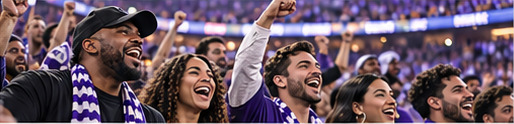
If you watched a big game this year, you probably watched two screens at once. A May 2026 YouGov survey for the USC Annenberg x ACC Think Tank found that 92% of Gen Z sports fans do something else on their phones during a game, and only 8% stay off their devices, Net Influencer reported. The second screen has become the place where fans react, argue and catch up. Leagues and platforms now plan for it, from World Cup scheduling to creator rosters to features built for latecomers.
What the second screen data says about young fans
The USC Annenberg study surveyed 2,154 U.S. Gen Z adults between May 12 and May 20, 2026. The habits it measured came out close together:
- 37% text people they know about the game
- 35% watch highlights or short-form clips
- 35% scroll social media that has nothing to do with the game
That split matters to anyone selling a broadcast. Texting about the game keeps attention on the event. Scrolling unrelated feeds pulls it away. A broadcaster competes with both at once, and the group text is the only one of the two working in its favor.
The group chat is the new watch party
A second survey points to the same habit from the other side of the Atlantic. Snapchat released OnePoll research on 1,000 UK Gen Z respondents in May 2026, ahead of the World Cup, Sports Video Group reported. The findings center on messaging:
- 72% said they would message fellow fans right after their team scores
- 62% said messaging apps help them feel connected to other fans during matches
- 54% said their group chats would be “kicking off” during the tournament
- 54% said they were likely to film themselves celebrating a goal to send to friends or family
The same respondents said they check their phones almost 10 times per game on average. Most of them still watch together in person: 56% usually watch with friends or family at home and 41% in pubs or bars. The phone adds a second room to the one they are already sitting in.
The 2026 World Cup gave that habit a built-in slot. FIFA scheduled water breaks at the 22nd minute of each half, and 74% of the UK respondents said they were likely to reach for their phones during those pauses.
Fans in the stadium share the game too
Fans inside the venue post too. During the halftime show at the World Cup final, uplink traffic on Verizon’s network rose nearly 70% as fans sent out video and photos, according to TelecomLead. At Super Bowl LIX in 2025, Extreme Networks’ Wi-Fi analytics found Facebook led social usage inside the building, while the NFL app drew the most engagement among sports apps.
Those uploads feed the same group chats that fans at home are reading. Carriers and teams now build networks around that two-way traffic, a shift we cover in our report on the connected stadium.
Creators and co-streams join the broadcast
Rights holders have started inviting creators into the coverage they once guarded. When YouTube streamed its first exclusive NFL game from Sao Paulo in September 2025, creators including MrBeast, Marques Brownlee and Deestroying took part in the broadcast, TechCrunch reported.
FIFA went further for the World Cup. In January 2026 it named TikTok its first Preferred Platform, giving selected creators access to press conferences and training sessions and letting official media partners stream parts of matches live on TikTok, according to FIFA. YouTube later signed on as a Preferred Platform and named 25 creators with more than 350 million combined subscribers to cover the tournament, Net Influencer reported. Under that deal, official media partners could stream the first 10 minutes of every match on their own YouTube channels.
Broadcasters still hold the match rights, and FIFA’s deals hand creators the access around each match: the training sessions, the press rooms and the host cities. For a closer look at who those voices are, read our feature on new voices in sports commentary.
Social viewing tools chase the group chat
Streaming services have built features for the fan who arrives because the group chat lit up. Prime Video’s NBA coverage includes Rapid Recap, an AI-built highlight reel of two minutes or less for viewers joining a game in progress, along with Key Moments and a customizable Multiview, according to Sports Video Group. Those tools fit the 35% of young fans in the USC Annenberg study who already watch highlights mid-game. Our report on AI-powered highlights covers how those clips get made.
Other products put the conversation on the same screen as the game. Social streaming communities such as FansPulse pair live game rooms with real-time chat and creator commentary, which moves the group text and the broadcast into one place.
The UK survey gives brands a reason to pay attention: 69% of respondents said they would be open to hearing from brands during breaks in play if the content was relevant, such as food delivery or match-related content.
Sources
- Net Influencer: Nearly Half of Gen Z Sports Fans Discover Athletes Through Content, Not Competition, Study Finds
- Sports Video Group: FIFA World Cup 2026 Mid-Half Water Breaks Create New Opportunities to Engage Gen Z on Smartphones
- TelecomLead: Verizon Network Carries Nearly 500 TB of Data During FIFA World Cup 2026, Delivers 29.2 TB at Final
- Extreme Networks: The Top Moments of Super Bowl LIX According to Wi-Fi Analytics
- TechCrunch: YouTube’s first exclusive NFL broadcast attracts over 17M viewers
- FIFA: TikTok becomes Preferred Platform to enhance coverage of FIFA World Cup 2026
- Net Influencer: YouTube names 25-creator global roster for FIFA World Cup 2026 coverage
- Sports Video Group: Prime Video tips off second NBA season with AI-driven Prime 360 virtual camera system